

Interview with Piyush Tewari, Founder & CEO, SaveLIFE Foundation

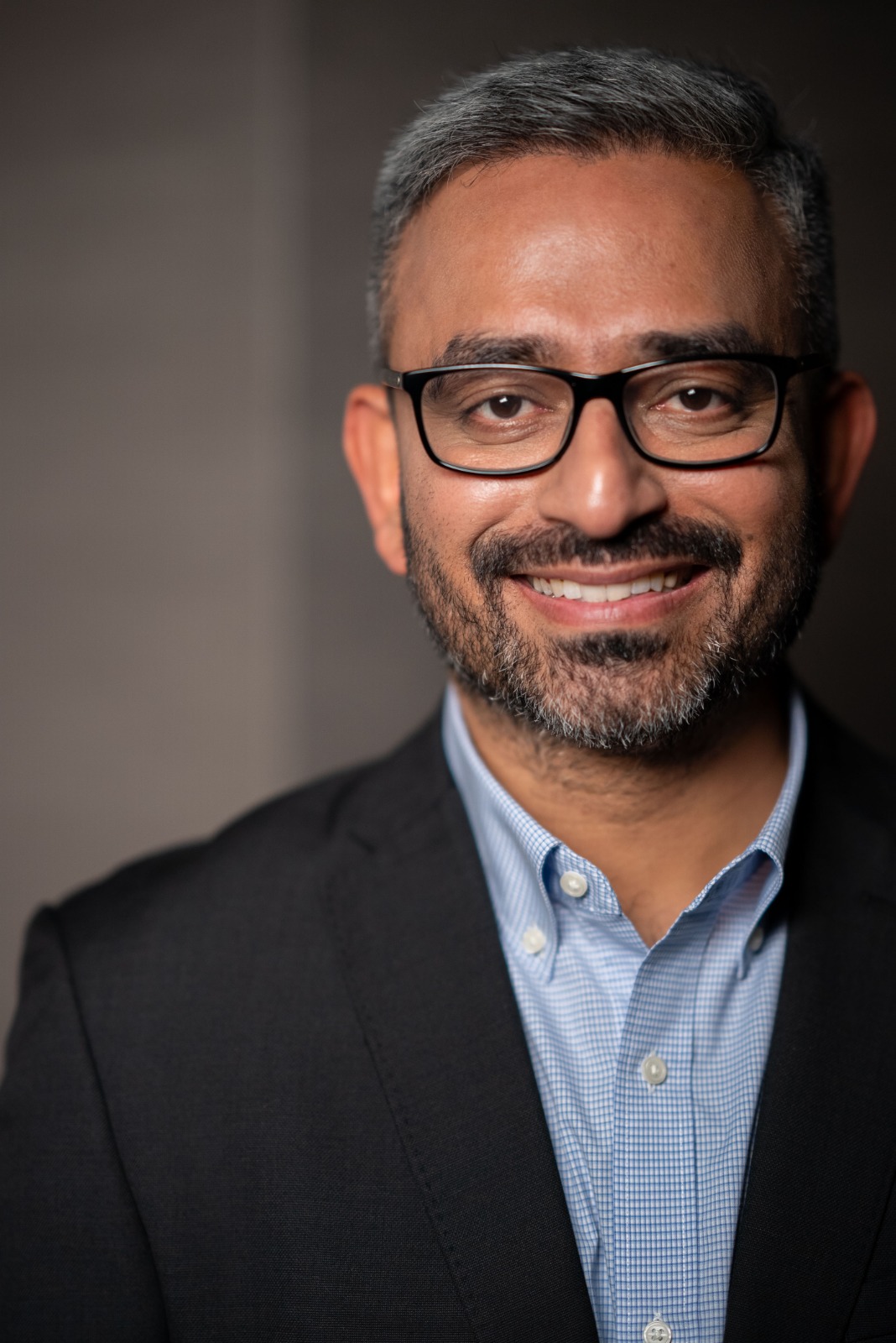
Piyush Tewari is the Founder and CEO of SaveLIFE Foundation, a non-profit reducing road crash fatalities through systemic reform. He pioneered India’s Zero Fatality Corridor and helped pass the Good Samaritan Law protecting bystanders. A Skoll Awardee and Schwab Foundation Social Entrepreneur, he advises India’s National Road Safety Council.
A personal experience was the turning point that led you to champion the cause of road safety. How did that moment crystallise your sense of purpose and the impact you hoped to create?
I did not come to road safety as a
policy interest. I came to it through grief. When my teenage cousin was killed
in a road crash, the loss felt brutally personal, but what stayed with me was
how ordinarily the system treated it. A preventable death was filed away like
fate: little accountability, little learning, and no urgency to ensure it would
not happen again. That contrast between a family’s irreversible loss and a
system’s indifference crystallised my purpose.
SaveLIFE Foundation was born from that moment with a simple conviction: road
deaths are predictable and preventable when we treat them as a public health
and governance challenge, not as random “accidents.” From the beginning, our
aim was not only to raise awareness, but to build a model that the government could
adopt and scale. That is why our work combines the science of safer roads with
the reality of how systems actually function: data led crash analysis, targeted
engineering fixes, enforcement reforms, and faster trauma response.
Over time, the mission has become even clearer: prove that saving lives can be
engineered into the system. Whether through our Zero Fatality Corridor and
District Programmes, or through national policy reforms like the Good Samaritan
protections, SaveLIFE’s goal has been to shift India from reacting after
tragedy to preventing tragedy in the first place, and to make “lives saved” the
country’s most meaningful mobility metric.
India’s infrastructure growth is
often measured in kilometres built. How can safety be embedded as a core
performance and accountability metric, rather than treated as an afterthought?
If we only measure infrastructure
in kilometres built, we will keep building faster roads that move vehicles
efficiently but move people into harm. SaveLIFE’s work has shown that safety
improves when it is treated as a core performance outcome with clear ownership
and measurable targets. The shift starts with what we measure: fatalities and
serious injuries per 100 km, reduction in high risk crash types on identified
corridors, compliance with safe speed and safe junction standards, and time to
emergency response and definitive care. These should be published corridor wise
and district wise, so accountability is visible.
Next is what we reward. Project completion should not mean “construction
finished.” It should mean “safety validated.” Road safety audits at design,
construction, and post opening stages must be mandatory, independent, and
closure oriented. Findings should be non negotiable, with payment milestones
and contractor ratings linked to compliance with safety requirements like forgiving
roadsides, safe median treatments, pedestrian and two wheeler protection, clear
signage, and maintenance.
Finally, embed single point accountability. On highways especially, fragmented
responsibility kills outcomes. SaveLIFE’s on ground programs work best when
engineering, enforcement, and emergency care operate as one coordinated system
with clear leadership, shared dashboards, and time bound action plans. When
safety becomes measurable, funded, audited, and owned, it stops being an
afterthought.
How can Indian industry play a
more strategic role in advancing road safety outcomes—through innovation,
leadership, and policy engagement—beyond traditional CSR approaches?
Indian industry can be one of the
strongest accelerators of road safety if it moves from CSR as charity to safety
as strategy. SaveLIFE’s experience is that the highest impact comes when
companies use their operational leverage, innovation capacity, and policy voice
to make safety the default condition of mobility.
First, lead through fleet and platform safety. Logistics firms, ride sharing
and delivery platforms, and large employers can implement speed governance,
fatigue management, safer routing, telematics based coaching, and strict helmet
and seatbelt compliance. These measures protect workers and customers while
setting market norms.
Second, invest
in scalable solutions, not one off campaigns. Support proven interventions on
high risk corridors and districts with clear targets, independent evaluation,
and transparent reporting. Fund the “last mile” that government struggles with:
audit quality, maintenance, and real time monitoring.
Third, strengthen systems through technology and data. Industry can support
digital tools for crash investigation, enforcement, and training that can
become digital public goods, and partner with organisations like SaveLIFE that
work closely with government for adoption at scale.
Finally, use industry bodies to champion stronger safety regulation, not weaker
standards. The most responsible corporate stance is to back safer speeds,
better vehicle safety norms, and evidence based road design. When industry
treats road safety as
governance and competitiveness, not philanthropy, outcomes change at population
scale.
As mobility rapidly digitises
with EVs, ride-sharing, and autonomous technologies, how should regulation
evolve to anticipate risk rather than respond after tragedy occurs?
As EVs, connected vehicles,
ride sharing, and assisted driving features grow, regulation must anticipate
risk rather than respond after tragedy. SaveLIFE’s lens is simple: new
technology must come with new accountability, because the stakes are measured
in lives.
First, shift from one-time approvals to continuous safety oversight. Regulators
should require post-market monitoring, incident reporting, and rapid corrective
action protocols for vehicles, software updates, and mobility platforms.
Second, update
standards for rescue and post crash safety. EV battery risks, thermal events,
and post-crash handling demand clear protocols for first responders. Vehicle
design should prioritise mechanical access and fast extrication, not just
aesthetics.
Third, regulate platforms, not only vehicles. Ride sharing and delivery
incentives can unintentionally reward speed and fatigue. Regulation can require
platform level safety safeguards: limits on continuous driving hours, speed
risk alerts, safe route defaults, and incentive structures that reward safety
metrics.
Fourth, build regulatory sandboxes with strong guardrails. Test new technologies
in controlled environments with independent evaluation before mass rollout.
Finally, invest in the data spine. SaveLIFE’s work with government shows that
better crash data, faster learning loops, and shared dashboards make prevention
possible. The goal is not to slow innovation. It is to ensure innovation is
safe by design, with accountability built in from day one.
As India looks ahead to 2047,
what is your message to policymakers, business leaders, and citizens working
collectively to realise the India@100 vision?
If India@100 is about becoming a
prosperous, confident nation by 2047, then safety must be part of our
definition of development. A country cannot call itself world class if daily
travel is a gamble for ordinary families. SaveLIFE’s message, grounded in years
of on ground implementation, is that road safety is not a niche issue. It is a
test of governance, civic culture, and the value we place on human life.
To policymakers: make safety a governance priority with clear leadership, measurable
targets, and public accountability. Treat “lives saved” as a national
performance metric. Invest in systems that prevent crashes through safer design
and speed management, and systems that save lives through faster emergency
response and trauma care. Institutionalise independent road safety audits and
make compliance non negotiable. Scale what works, and measure what matters.
To business leaders: treat road safety as strategy. Protect your workforce and
customers through safer fleets and platforms. Use your influence to champion
stronger standards, not diluted ones. Partner with implementers like SaveLIFE
to scale proven models and build digital tools that government can adopt.
To citizens: demand safer roads,
and practise safer mobility. Every helmet, every seatbelt, every choice not to
speed is civic leadership. By 2047, India can show the world that rapid growth
and human safety can advance together, and that progress is measured not only
in kilometres built, but in families kept whole.