

Interview with Rouble Nagi, Founder, Rouble Nagi Art Foundation

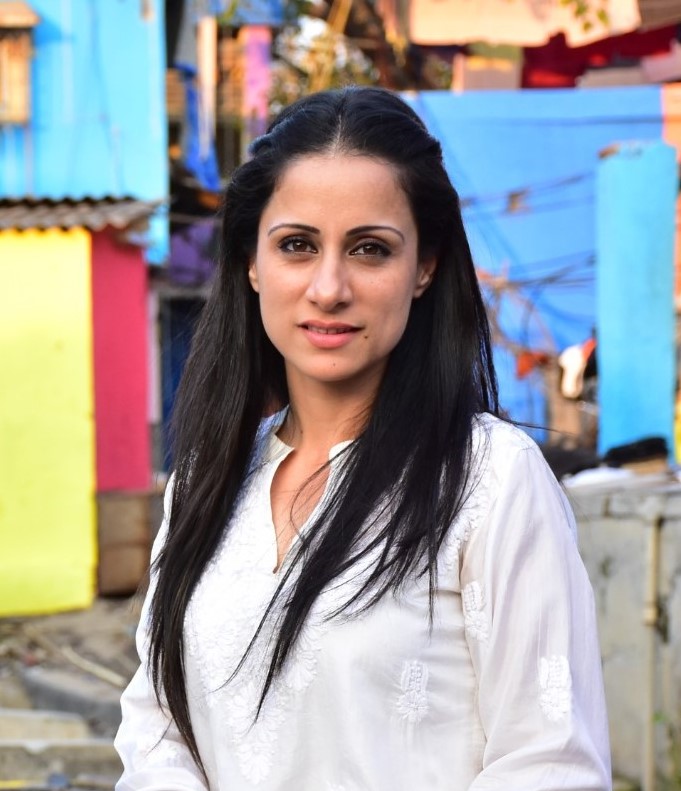
Rouble Nagi is the Founder of the Rouble Nagi Art Foundation and creator of Misaal India, a community transformation initiative impacting over one million lives. A Global Teacher Prize 2026 recipient, she has transformed 300,000+ dwellings across India through art, education, and women’s empowerment. An internationally acclaimed artist, she has also held 150+ exhibitions worldwide and pioneered the “Living Walls of Learning” concept.
You’ve taken
education beyond classrooms into communities—what does an ideal learning
ecosystem for India@100 look like to you?
For India@100, an
ideal learning ecosystem is connected, everywhere, continuous, and inclusive. It
does not wait for perfect buildings or policies, it starts wherever a child is.
Whether in a government school in a rural village or a private school in a
city, the learning experience must be equally rich, dignified, and empowering.
Because when education becomes a shared responsibility and a shared joy we do
not just educate children. We transform communities, and through them, the
nation. When we look at insights from the CMS Education Survey 2025 – Ministry
of Statistics & Programme Implementation, we are reminded that the majority
of India’s children—over 55.9%—are in government schools, serving more than 120
million students, while about 31.9% attend private unaided schools. This tells
us that the future of India will largely be shaped in government classrooms and
rural ecosystems. So the question is not how we create excellence in pockets,
but how we standardize opportunity across systems. An ideal ecosystem,
therefore, must be designed to function equally in a government school in a
remote village and a private school in an urban city.
First, it must be
deeply connected. Just like nature, learning should not exist in silos. Schools,
communities, families, mentors, artists, local professionals, digital tools,
and government systems must all interact. When I created Living Walls
of Learning, the idea was exactly this: that learning does not belong only
inside classrooms, what if there is lack of infrastructure. A wall, a street, a
neighbourhood can become a teacher. When children see alphabets, numbers,
science, hygiene, or values painted into their everyday surroundings, learning
becomes part of life itself, not something separate or intimidating.
Communities stop being passive observers and become active partners in
education. Secondly, It is continuous.
The biggest challenge in India is not just enrolment, it is retention. Many
children, especially from underserved backgrounds, drop out due to economic or
social pressures. A future-ready ecosystem must support learning over a
lifetime, not just during school years. This means building bridges—between
school and skill, education and employment, learning and livelihood.
Mentorship, vocational exposure, and emotional support systems must ensure that
a child does not exit the ecosystem prematurely. Continuity is what converts
access into transformation.
Thirdly, It includes everything—and everyone. An effective ecosystem is not limited to textbooks. It integrates teachers, digital tools, storytelling, experiential learning, vocational training, and structured curricula into one aligned strategy. But inclusion is the real benchmark. Underprivileged children living in rural villages and slums must not be an afterthought, they must be central to the design. This requires intentional integration: access to the same quality of content, the same exposure to mentors, and the same pathways to opportunity as any child in a private institution.
Ultimately, an
ideal ecosystem is one where a child’s environment does not limit their
potential.
It is where learning is constant, inclusive, and deeply connected to life
itself. And when that happens, education stops being a privilege for some and
truly becomes a right for all.
Your
concept of turning walls into learning spaces is powerful—what inspired “Living
Walls of Learning”?
The idea of “Living
Walls of Learning” emerged not from theory, but from necessity. When I first
began working in underserved communities, I saw that many children had no
access to formal classrooms. Walls around them were blank, broken, or neglected
– yet they were everywhere. I began to see these walls not as barriers, but as
opportunities. The turning point came when I painted simple alphabets and
numbers on a wall in a Mumbai slum, and a child who had never been to school
began tracing them with curiosity and joy. That moment redefined my
understanding of education. Learning did not need to be confined within four
walls – it could live within them.
“Living Walls” are
designed to be interactive, visual, and rooted in daily life. They transform
passive spaces into active learning environments where children engage freely,
without fear. Over time, these walls also became community assets – parents,
siblings, and neighbours began interacting with them. The inspiration,
therefore, was simple: to meet children where they are, using what already
exists, and to restore dignity to spaces often overlooked. It is a reminder
that education, at its core, is about accessibility, creativity, and inclusion.
How has receiving
the GEMS Education Global Teacher Prize 2026 deepened your connection with
the communities you work with and strengthened shared ownership in your
journey?
More than a
personal milestone, receiving the GEMS Education Global Teacher Prize 2026 has
felt like a collective recognition of the communities I work with. When I returned
after the announcement, the response from children, parents, and local
volunteers was deeply emotional. This prize belongs to them, because they have
been equal partners in this journey.
At the same time,
the award has deepened my responsibility. It has expanded my platform, but also
reinforced my commitment to remain grounded. The work continues to be local,
human, and deeply personal. What has changed is the scale of belief – both within
the communities and beyond. It has created a shared understanding that
meaningful change can begin in the smallest of spaces, and that when
communities take ownership, transformation becomes sustainable and
far-reaching.
How do you bring
parents and communities into the learning process, especially where education
is not always a priority?
In many of the
communities I work with, education is often overshadowed by immediate survival
needs. Therefore, the first step is not instruction – it is trust. We begin by
listening to families, understanding their realities, and respecting their
priorities. Instead of imposing education as an external idea, we integrate it
into their daily lives.
Visual learning
plays a key role. When walls become educational tools, parents naturally engage
– they see, understand, and often participate. A mother explaining a mural to
her child or a father pausing to read a painted sentence creates organic
learning moments. This familiarity reduces resistance.
We also connect education
to tangible outcomes. Hygiene awareness, health improvements, and better
attendance demonstrate immediate benefits. When families see fewer illnesses or
improved confidence in their children, education becomes relevant. Flexible
learning schedules also ensure that children with family responsibilities are
not excluded.
Over time, this
approach shifts mindsets. Education is no longer viewed as charity or
obligation, but as a shared investment. Communities begin to protect and
sustain learning spaces themselves. The transformation is gradual, but powerful
– because it is built on participation, dignity, and mutual respect.
How can India bridge the gap between education and employability for marginalized youth?
Bridging the gap
between education and employability for marginalized youth in India requires
more than incremental change, it demands a systemic realignment of how
we define education itself. If we continue to treat education as purely
academic, we will continue to produce degree holders who are not employable.
For me, the starting point is clear: quality education must come first,
but quality cannot mean rote learning. It must mean relevance, adaptability,
and real-world application. India today stands at a critical juncture. We
cannot aspire to be a global leader if we remain a nation of job seekers alone.
We must consciously build a generation of job creators, young
people who are skilled, confident, and capable of building livelihoods not just
for themselves, but for others. To achieve this, three structural shifts are
essential:
I. Integrating
vocational training early and meaningfully
I believe that the vision outlined in National Education Policy 2020 is a step
in the right direction, introducing vocational education from Class 6 onwards.
But this cannot become a token inclusion. Skill-based learning must be dignified,
aspirational, and embedded into mainstream education, not treated as a
secondary track. For marginalized youth especially, early exposure to skills,
whether in crafts, digital tools, entrepreneurship, or services, creates
pathways to economic independence and reduces dropout rates.
II. Building
demand-driven, market-aligned skills
There is a persistent mismatch between what is taught and what the market
needs. Marginalized youth cannot afford this gap. Training programs must be
aligned with local and emerging economic opportunities, from green
jobs and digital services to micro-entrepreneurship and creative industries.
This requires continuous collaboration between educators, industry, and
community organizations to ensure that skills are not theoretical, but
immediately applicable.
III. Ensuring
digital and mentorship equity
Access today is not just about schools, it is about connectivity,
devices, and guidance. Without digital access, marginalized youth are
excluded from the fastest-growing segments of the economy. But technology alone
is not enough. Mentorship plays a critical role in helping young people
navigate choices, build confidence, and transition into the workforce. An
ecosystem that combines digital tools with human guidance is what truly enables
mobility.
At a deeper level,
we must also shift our mindset, from employability to entrepreneurial
capability. When a young person from an underserved background is equipped with
skills, exposure, and support, they do not just look for jobs, they begin to
create value within their own communities.
That is how cycles of poverty are broken. Bridging this gap, therefore, is not just an education reform, it is a nation-building exercise.
Your work
integrates environmental awareness and social responsibility through art—how
important is this for shaping the next generation?
Integrating
environmental awareness and social responsibility through art is essential for
shaping not just educated individuals, but conscious citizens. Children learn
best when concepts are visible, relatable, and engaging. Through murals and
creative activities, abstract ideas like cleanliness, sustainability, and
community care become part of their everyday environment.
When a child paints
or interacts with a wall that promotes hygiene or environmental care, the
lesson is not theoretical – it becomes lived experience. These visual reminders
influence behaviour in subtle but lasting ways. Over time, children carry these
habits into their homes, influencing families and neighbours.
Equally important
is the sense of responsibility that art fosters. When children participate in
creating these spaces, they feel ownership. They are more likely to protect,
maintain, and respect their surroundings. This builds a deeper understanding of
collective responsibility.
In today’s world,
education must go beyond academics. It must prepare children to navigate social
and environmental challenges with empathy and awareness. Art becomes a powerful
bridge – it connects knowledge with action, and awareness with responsibility.
By nurturing these values early, we are shaping a generation that is not only
skilled, but also mindful and engaged.
With the rapid
evolution of AI and automation, how should we redefine “basic education” for
the future?
Currently, the
educational scenario in India is in a state of ambitious transition, marked by
a significant divide between intent and infrastructure. For decades, the Indian
system has been characterized by a "factory model" of education that
prioritizes rote memorization and high-stakes testing, a vestige of the
industrial era that is increasingly ill-suited for an AI-driven economy. While
India possesses a massive demographic dividend, a large portion of the
workforce remains underprepared for high-value digital roles. However, like I
mentioned earlier the National Education Policy (NEP) 2020 has laid the
groundwork for reform by advocating for a shift from "what to think"
to "how to think." Despite this policy shift, the "digital
divide" remains a critical hurdle, as rural schools often lack the basic
internet connectivity and hardware required to implement a modern digital
curriculum, creating a tiered system of opportunity.
To address these
challenges, the Indian government and private sectors have initiated several
forward-looking programs designed to democratize AI literacy. The Central Board
of Secondary Education (CBSE), in collaboration with tech giants like Intel and
Microsoft, has already introduced AI as a formal subject for students as early
as grade eight, aiming to demystify technology for the masses. Simultaneously,
the Atal Innovation Mission has established over 10,000 Atal Tinkering Labs
across the country, providing students with hands-on experience in robotics,
IoT, and 3D printing. On the digital literacy front, the Pradhan Mantri Gramin
Digital Saksharta Abhiyan (PMGDISHA) this is a wonderful initiative as per me,
working to make six crore rural households digitally literate, ensuring that
the foundation of the future economy is not restricted to urban centers.
Looking ahead,
redefining basic education requires a "phygital" approach, blending
physical classrooms with AI-driven personalized learning tools that can adapt
to a student's individual pace. To truly prepare the next generation, teacher
training must be revolutionized; educators should be reimagined as mentors and
facilitators of inquiry rather than mere dispensers of information. There is
also an urgent need to integrate vocational training with mainstream education,
ensuring that students can pivot between roles as automation shifts the job
market. By focusing on "learning how to learn" and fostering a
mindset of lifelong adaptability, India can transform the threat of automation
into an opportunity, ensuring its youth are not just users of technology, but
its ethical architects and masters.
What is one piece of advice you would offer to those aspiring to drive change at the grassroots level?
My advice would be
simple: start with what you have, and start where you are. Grassroots change
does not begin with large resources or perfect systems – it begins with
understanding people and building trust. Spend time listening before acting.
The most effective solutions are those that emerge from within communities, not
those imposed from outside.
Be prepared for
challenges and slow progress. Change at the grassroots level is rarely
immediate. It requires patience, consistency, and the willingness to adapt.
What works in one community may not work in another, so flexibility is key.
Most importantly,
focus on dignity. Whether you are working in education, health, or any other
sector, people must feel respected and included in the process. When
individuals see themselves as partners rather than beneficiaries,
transformation becomes sustainable.
Do not underestimate small actions. A single initiative, if rooted in purpose and carried forward with commitment, can create ripple effects far beyond what you imagine. Impact is not always visible immediately, but it is always meaningful. Stay grounded, stay committed, and remember that lasting change is built step by step, through trust, empathy, and shared effort.